 Image 1 of 4
 Image 2 of 4
 Image 3 of 4
 Image 4 of 4
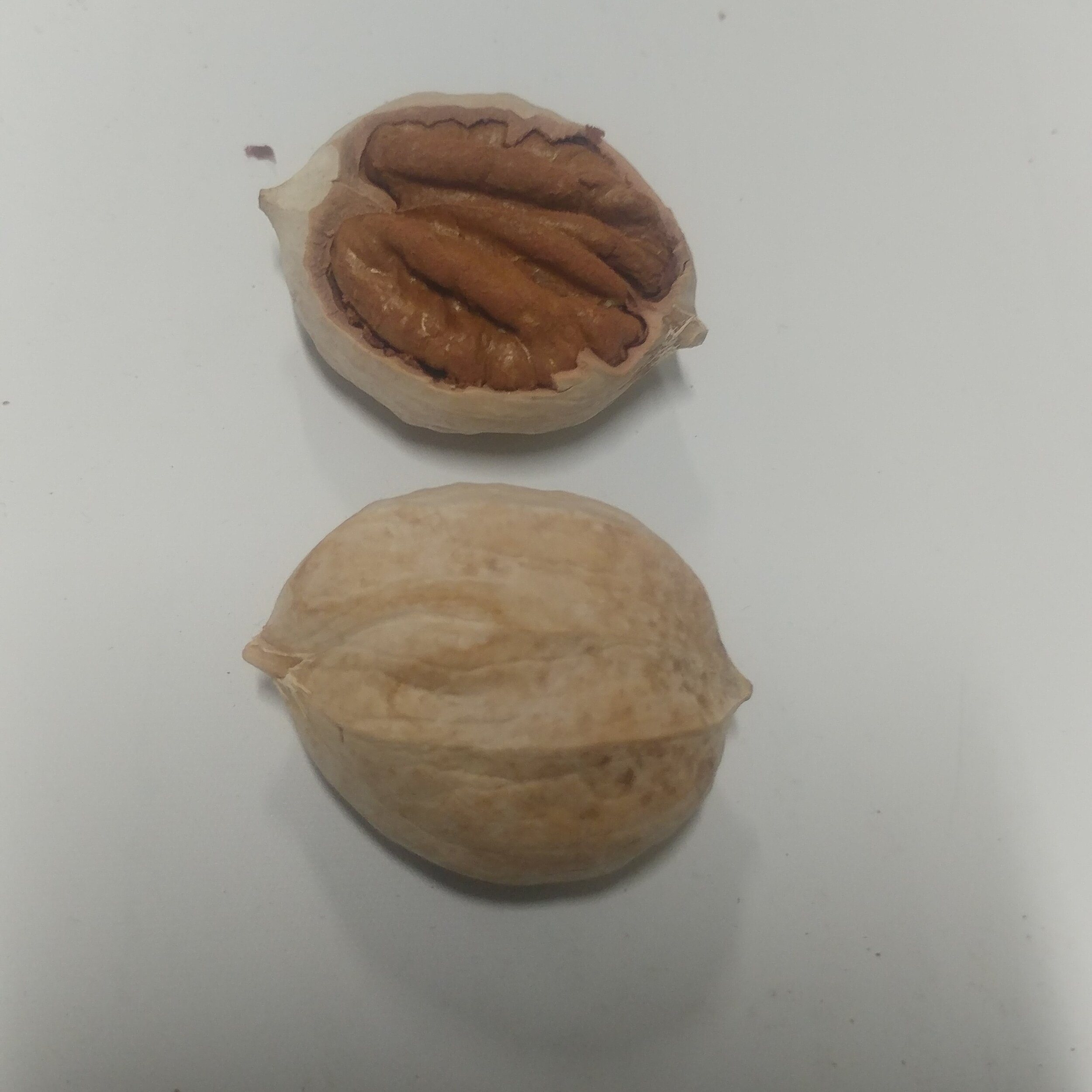
To those who taste the shagbark hickory nut, it is the best flavored in the world. Firm texture of proteins and carbs, with a buttery mouth feel, and overtones of vanilla and maple. The tree is named for its shaggy bark, which gives it a rugged, attractive appearance.
These seedlings are grown from the best quality examples of shagbark hickories known and tested, many from all-cultivar orchards, for superior pollen possibilities. What makes a quality nut? The two biggest factors are: 1) kernel:shell ratio, and 2) ease of crackability. A great shagbark selection has a kernel ratio of 40-50%, which translates to a very thin shell, and when cracked, the kernels are easy to extract in perfect halves.
Choose from the options below, or select Assorted Bundles to receive a mix of good genetics.
Brooks seedlings — Brooks is a selection from Upshur county, West Virginia with a high kernel ratio and cracks easy. 40.3% kernel @ 3.24g.
Conowingo seedlings — from an outstanding wild tree in Lancaster county, PA. Shagbark x shellbark hybrid. 40.5% kernel @ 4.0g.
Goheen seedlings — older cultivar. Original tree from Pennsylvania Furnace, PA. 38-40% kernel @ 4.0g.
Grainger seedlings — these are proven winners, in that many of these seedlings may make trees as good or better than the original Grainger parent cultivar. 44% kernel @ 4.0g.
Lorane seedlings — one of the best shagbarks out there, very similar to Grainger in its characteristics, but origin tree from Lorane, PA in Berks county, Pennsylvania. 44% kernel @ 3.9g.
Manatawny seedlings — from a quality wild tree with large nuts in Berks county, Pennsylvania. 36.6% kernel @ 3.21g.
Walters seedlings — it is unknown where the original tree came from. Some say Indiana. 51% kernel @ 6.51g.
Weschcke seedlings — original tree from Fayette, Iowa, and propagated and popularized by Carl Weschcke. 37-47% kernel @ 1.8-2.6g.
Wilmoth seedlings — variety from Kentucky introduced by Les Wilmoth, charter member of KYNGA. 45% kernel @ 2.5g.
To those who taste the shagbark hickory nut, it is the best flavored in the world. Firm texture of proteins and carbs, with a buttery mouth feel, and overtones of vanilla and maple. The tree is named for its shaggy bark, which gives it a rugged, attractive appearance.
These seedlings are grown from the best quality examples of shagbark hickories known and tested, many from all-cultivar orchards, for superior pollen possibilities. What makes a quality nut? The two biggest factors are: 1) kernel:shell ratio, and 2) ease of crackability. A great shagbark selection has a kernel ratio of 40-50%, which translates to a very thin shell, and when cracked, the kernels are easy to extract in perfect halves.
Choose from the options below, or select Assorted Bundles to receive a mix of good genetics.
Brooks seedlings — Brooks is a selection from Upshur county, West Virginia with a high kernel ratio and cracks easy. 40.3% kernel @ 3.24g.
Conowingo seedlings — from an outstanding wild tree in Lancaster county, PA. Shagbark x shellbark hybrid. 40.5% kernel @ 4.0g.
Goheen seedlings — older cultivar. Original tree from Pennsylvania Furnace, PA. 38-40% kernel @ 4.0g.
Grainger seedlings — these are proven winners, in that many of these seedlings may make trees as good or better than the original Grainger parent cultivar. 44% kernel @ 4.0g.
Lorane seedlings — one of the best shagbarks out there, very similar to Grainger in its characteristics, but origin tree from Lorane, PA in Berks county, Pennsylvania. 44% kernel @ 3.9g.
Manatawny seedlings — from a quality wild tree with large nuts in Berks county, Pennsylvania. 36.6% kernel @ 3.21g.
Walters seedlings — it is unknown where the original tree came from. Some say Indiana. 51% kernel @ 6.51g.
Weschcke seedlings — original tree from Fayette, Iowa, and propagated and popularized by Carl Weschcke. 37-47% kernel @ 1.8-2.6g.
Wilmoth seedlings — variety from Kentucky introduced by Les Wilmoth, charter member of KYNGA. 45% kernel @ 2.5g.