 Image 1 of 3
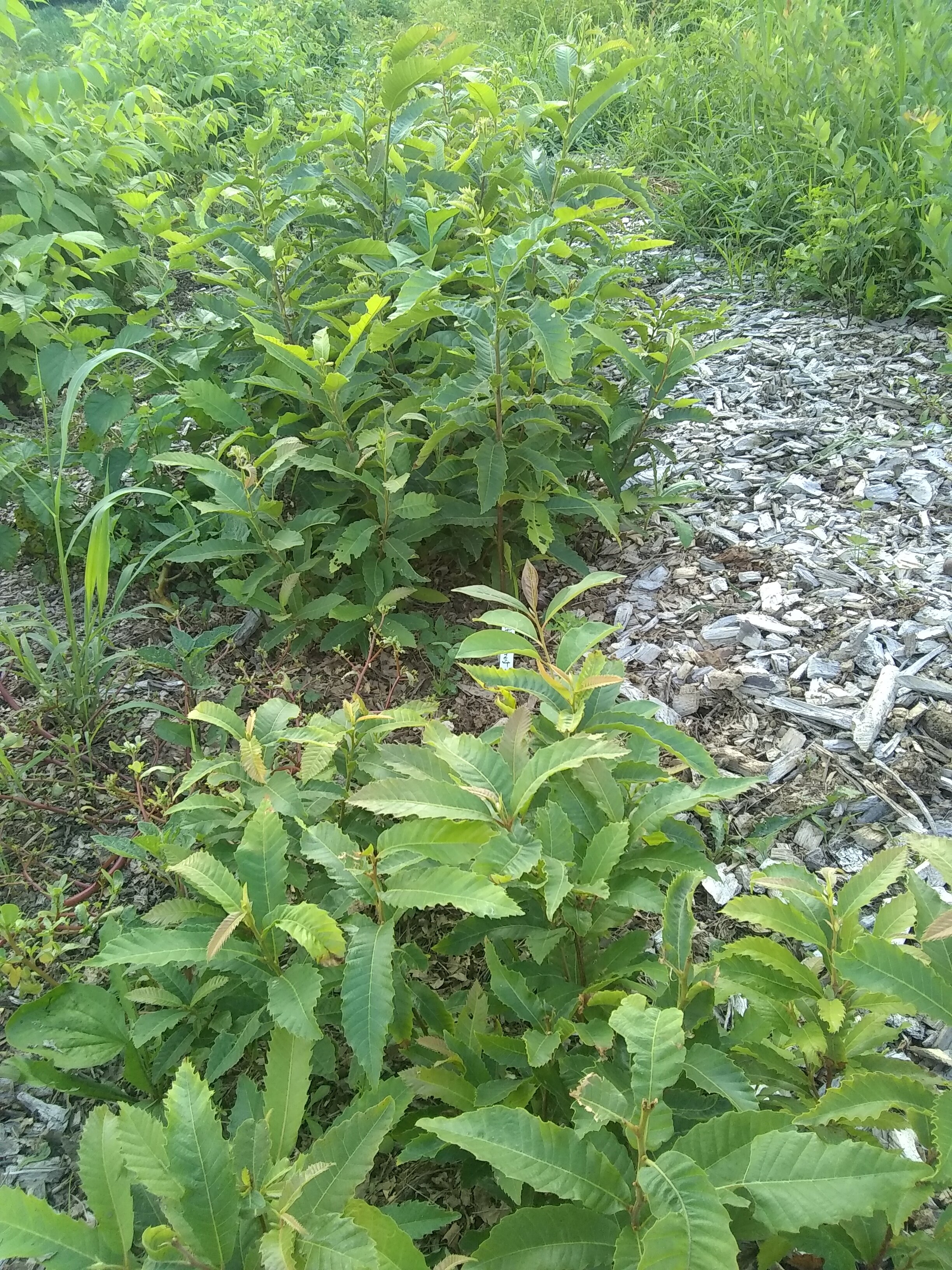 Image 2 of 3
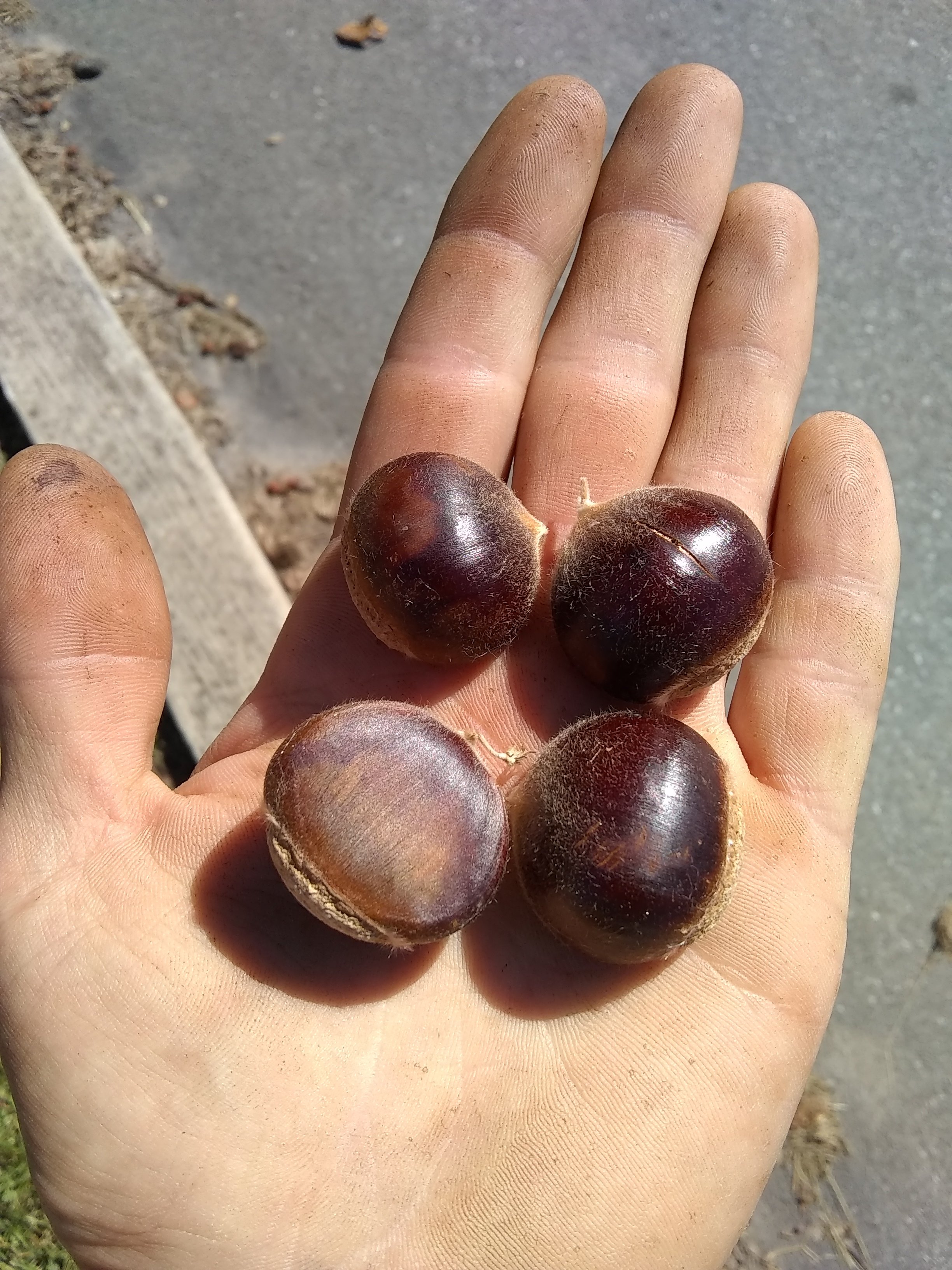 Image 3 of 3
Chestnuts produce cream-colored catkins in early summer, and in the early fall, their burs ripen nuts that are sweet and starchy, ideally suited for eating raw, roasted, or as a baking flour.
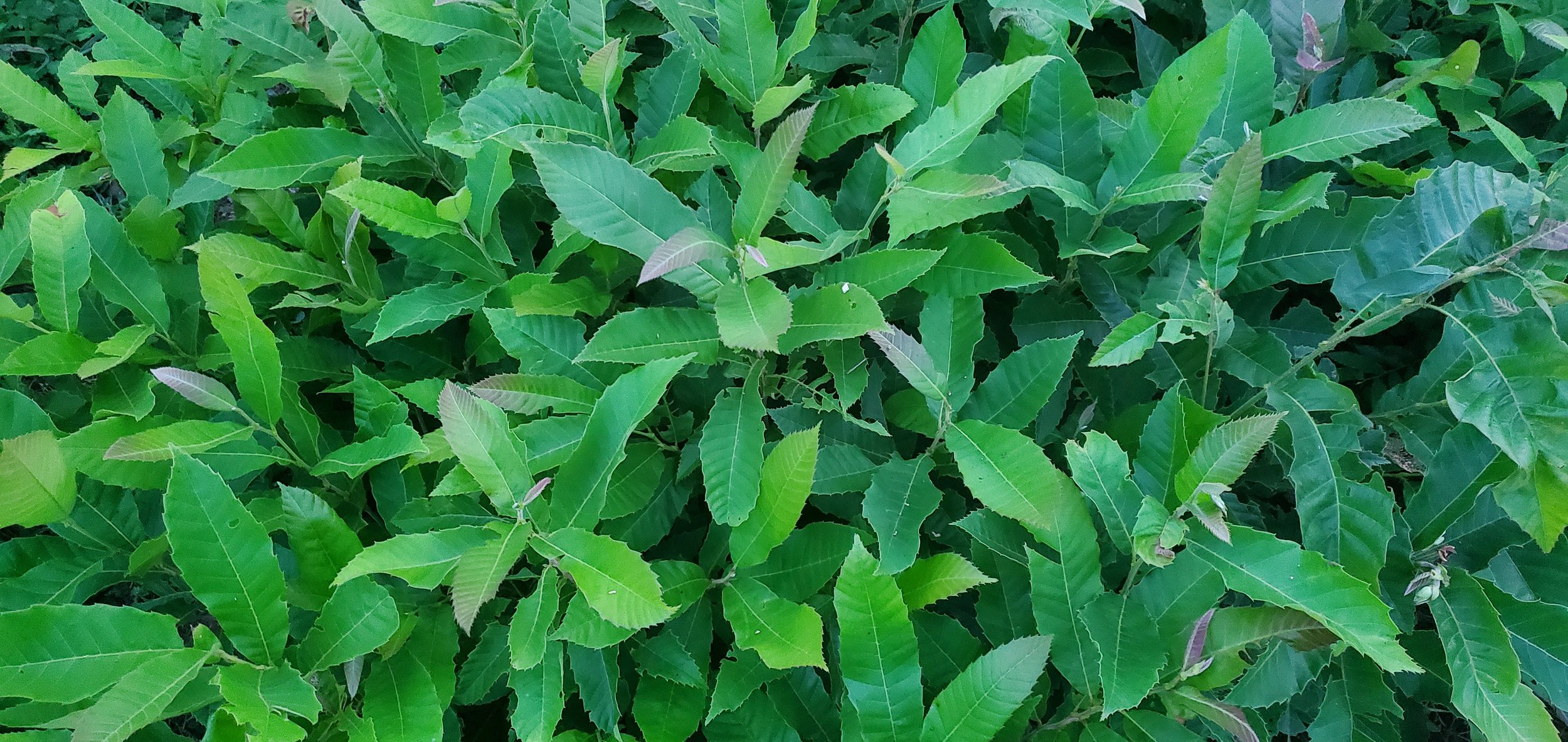
Chinese Chestnut, Castanea mollissima, is the breadtree for backyard enthusiasts and farmers alike! Unlike the American chestnut, the Chinese chestnut is not a timber tree, but is a shorter-statured orchard tree. They grow vigorously and are generally precocious in their bearing habits, so they may produce nuts in as little as 3-4 years with the right combination of genetics and site conditions. Their leaves are serrated and broad, with a dark, glossy sheen to them. They are considered highly resistant to fully immune to the chestnut blight fungus, Cryphonectria parasitica, which affects mainly our native American chestnut (Castanea dentata).
Japanese Chestnut, Castanea crenata, makes nuts which are less sweet than Chinese, but the largest of any chestnut species. In Japan and Korea, they are used primarily for flour. Their leaves are more narrow and serrate than Chinese and they are highly resistant to chestnut blight fungus.
European Chestnut, Castanea sativa, has a rich history of culinary use especially in central and western Europe; however, it’s susceptibility to chestnut blight makes the prospect of growing pure C. sativa trees in North America unwise.
Some orchard-type trees grown for their nut quality are hybrids featuring Chinese, Japanese, European, American, and/or chinquapin heritage in varying proportions. The leaf morphology of these hybrids varies, as does their susceptibility to the chestnut blight, although generally the orchard-type hybrids will not face any serious blight issues.
These are bareroot seedlings, generally 1 year old, sometimes 2 years old. They average 16-24” or 24-36” in height. Seedlots for the various seedlings are listed here with descriptions of their parent trees. There is also an option to receive a mixed bundle of trees. In this case, the parentage / variety for each will be noted and tagged.
They are as follows:
Auburn University seedlings — according to chestnut expert Mike Nave, the Auburn University material includes the best Chinese Chestnuts ever imported into the United States. Auburn University released three cultivars from this material: Homestead, Cropper, and Leader. The seedlings here are selected from a 2nd generation orchard. These are some of the best chestnuts I have available to offer.
Ament Orchard mix — Very large Japanese or Chinese x Japanese chestnuts from an orchard in Lancaster county, PA.
Amy seedlings — recent generation selection from Empire Chestnuts.
Coble Orchard mix — seedling mix grown from Parker Coble's orchard of collected cultivars in Adams county, PA.
Etter Orchard mix — seedling mix grown from Fayette Etter's orchard of Chestnut cultivars in Franklin county, PA.
Ford's Sweet seedlings — said to be a timber-type Chinese Chestnut with sweet chestnuts similar in quality to American.
Gideon seedlings — selected by Greg Miller of Empire Chestnuts in Ohio.
Green Lui and Red Lui — very attractive Chinese chestnut tree. The Green Lui makes regular, green leaves, and the Red Lui produces red leaves.
Kalmbach — excellent Chinese selection from a park in Berks county, PA.
MD Orchard mix — quality Chinese genetics from an orchard in Maryland.
Pequea Orchard mix — seedling mix grown from a quality orchard in Pequea, PA.
Posey Orchard mix — Chinese and hybrid trees from an older, heritage orchard in York county, PA. Some trees are over 75 feet tall, usually tall for Chinese.
Red Fern Badgersett mix — best selected seedlings from Red Fern Farm in Iowa, from the trees which originally came from Badgersett Institute in Minnesota. These tree are generally hybrids of some sort, and very northern hardy.
Red Fern Mother mix — these seedlings come from the best, older established mother trees at Red Fern Farm in Iowa.
Red Fern Up mix — these seedlings are from the best up-and-coming 2nd generation trees at Red Fern Farm.
Shing seedlings — quality Chinese selection, an older variety.
Swallowtail Orchard mix — seedling mix from Swallowtail Forest Farm’s orchard in Franklin county, PA.
Valley Garden Orchard mix — older, but quality Chinese trees from a century-old orchard planting at a park in Delaware.
Chestnuts produce cream-colored catkins in early summer, and in the early fall, their burs ripen nuts that are sweet and starchy, ideally suited for eating raw, roasted, or as a baking flour.
Chinese Chestnut, Castanea mollissima, is the breadtree for backyard enthusiasts and farmers alike! Unlike the American chestnut, the Chinese chestnut is not a timber tree, but is a shorter-statured orchard tree. They grow vigorously and are generally precocious in their bearing habits, so they may produce nuts in as little as 3-4 years with the right combination of genetics and site conditions. Their leaves are serrated and broad, with a dark, glossy sheen to them. They are considered highly resistant to fully immune to the chestnut blight fungus, Cryphonectria parasitica, which affects mainly our native American chestnut (Castanea dentata).
Japanese Chestnut, Castanea crenata, makes nuts which are less sweet than Chinese, but the largest of any chestnut species. In Japan and Korea, they are used primarily for flour. Their leaves are more narrow and serrate than Chinese and they are highly resistant to chestnut blight fungus.
European Chestnut, Castanea sativa, has a rich history of culinary use especially in central and western Europe; however, it’s susceptibility to chestnut blight makes the prospect of growing pure C. sativa trees in North America unwise.
Some orchard-type trees grown for their nut quality are hybrids featuring Chinese, Japanese, European, American, and/or chinquapin heritage in varying proportions. The leaf morphology of these hybrids varies, as does their susceptibility to the chestnut blight, although generally the orchard-type hybrids will not face any serious blight issues.
These are bareroot seedlings, generally 1 year old, sometimes 2 years old. They average 16-24” or 24-36” in height. Seedlots for the various seedlings are listed here with descriptions of their parent trees. There is also an option to receive a mixed bundle of trees. In this case, the parentage / variety for each will be noted and tagged.
They are as follows:
Auburn University seedlings — according to chestnut expert Mike Nave, the Auburn University material includes the best Chinese Chestnuts ever imported into the United States. Auburn University released three cultivars from this material: Homestead, Cropper, and Leader. The seedlings here are selected from a 2nd generation orchard. These are some of the best chestnuts I have available to offer.
Ament Orchard mix — Very large Japanese or Chinese x Japanese chestnuts from an orchard in Lancaster county, PA.
Amy seedlings — recent generation selection from Empire Chestnuts.
Coble Orchard mix — seedling mix grown from Parker Coble's orchard of collected cultivars in Adams county, PA.
Etter Orchard mix — seedling mix grown from Fayette Etter's orchard of Chestnut cultivars in Franklin county, PA.
Ford's Sweet seedlings — said to be a timber-type Chinese Chestnut with sweet chestnuts similar in quality to American.
Gideon seedlings — selected by Greg Miller of Empire Chestnuts in Ohio.
Green Lui and Red Lui — very attractive Chinese chestnut tree. The Green Lui makes regular, green leaves, and the Red Lui produces red leaves.
Kalmbach — excellent Chinese selection from a park in Berks county, PA.
MD Orchard mix — quality Chinese genetics from an orchard in Maryland.
Pequea Orchard mix — seedling mix grown from a quality orchard in Pequea, PA.
Posey Orchard mix — Chinese and hybrid trees from an older, heritage orchard in York county, PA. Some trees are over 75 feet tall, usually tall for Chinese.
Red Fern Badgersett mix — best selected seedlings from Red Fern Farm in Iowa, from the trees which originally came from Badgersett Institute in Minnesota. These tree are generally hybrids of some sort, and very northern hardy.
Red Fern Mother mix — these seedlings come from the best, older established mother trees at Red Fern Farm in Iowa.
Red Fern Up mix — these seedlings are from the best up-and-coming 2nd generation trees at Red Fern Farm.
Shing seedlings — quality Chinese selection, an older variety.
Swallowtail Orchard mix — seedling mix from Swallowtail Forest Farm’s orchard in Franklin county, PA.
Valley Garden Orchard mix — older, but quality Chinese trees from a century-old orchard planting at a park in Delaware.